Engrish Memory Verse

« Engrish Memory Verse [works with any number of people]

Type the memory verse into an online translator and translate the verse from English into another language (Chinese works best). Then take the foreign language translation and translate it back again into English. You will notice that it doesn’t come back out the way it went in! You might want to repeat the process a few times if you really want to mess it up, however, it does need to be vaguely recognisable…

Show this mistranslation to the group and then give them a limited amount of time to work out what the memory verse actually is.

Example:

John 3:16 [English TNIV] “For God so loved the world that he gave his one and only Son, that whoever believes in him shall not perish but have eternal life.

Translate into Chinese (Han): “對於上帝如此被愛世界他產生他僅有的兒子,誰相信他的那不會消滅,然而有來世。”

Translated back into English: “So is liked the world he producing his only son regarding God, who believes that his will not eliminate, however has next life.

If you repeat the process one more time you get: “Therefore is liked producing only then his about God’s his son, believes world he will not eliminate, has the life.

One Point Prayer Tree

This is a simple one point prayer segment that helps people think deeply about what they are actually praying for.

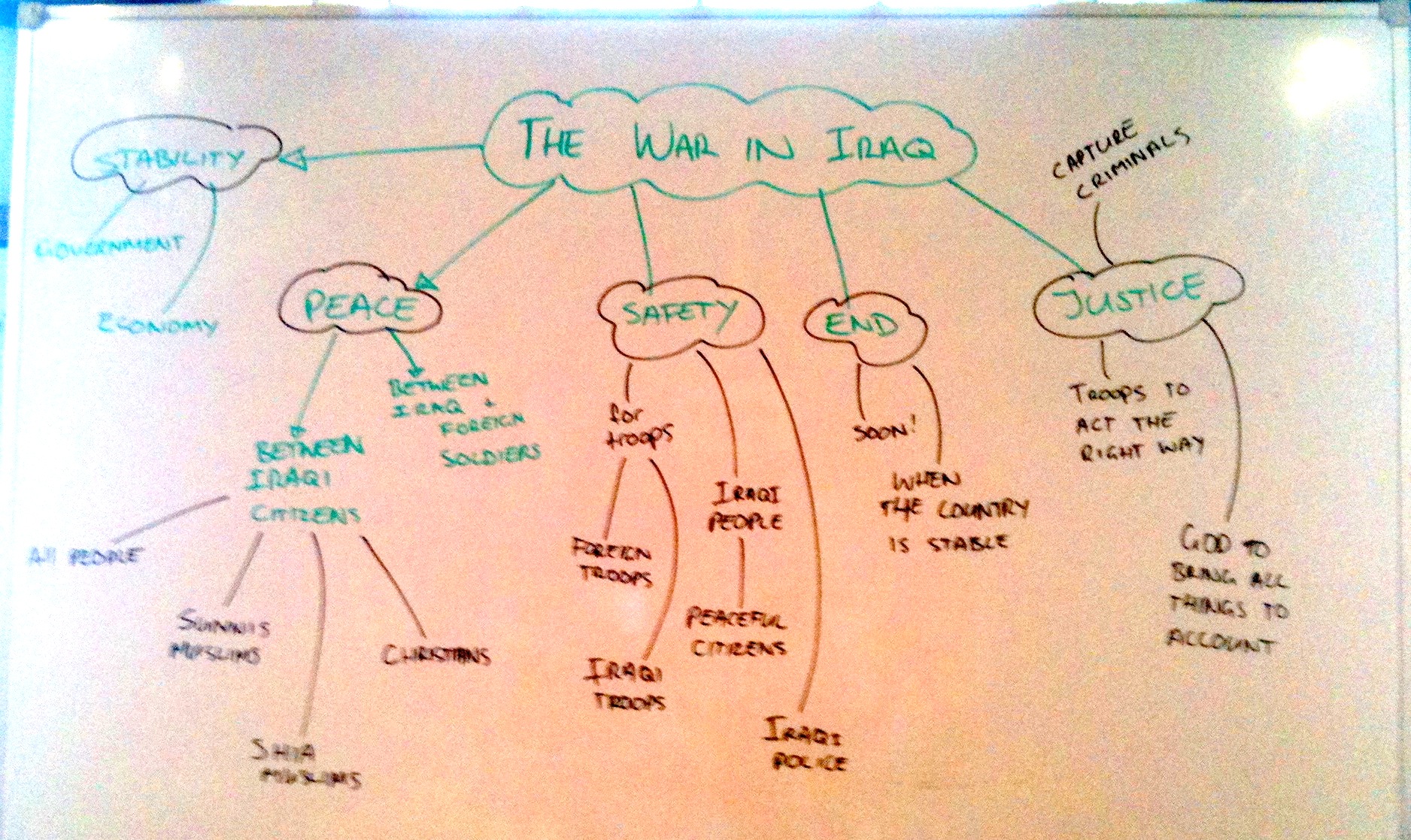
Ask the group to suggest one specific point to pray for (eg. war in Iraq, etc…). Write the prayer point at the top of a white board and then ask the question “What do we actually want to pray for (eg. the war in Iraq)?”. Then begin to write on the board the sub-points that people suggest we should pray for (ie. we want peace) and link the sub-point to the heading by drawing a line. Further still, ask a question about the sub-point (eg. “What do we want peace to look like?”) and then write those sub-points under the previous sub-point.

In the end you should have a kind of diagram that looks something like a tree with many specific sub-points to pray about the original prayer point.

This activity should help people really think about what they want to ask God for. It’s all very well to say “dear God I pray for the war in Iraq.” But are you praying for the war in Iraq to get worse, get better, or what? This prayer segment will help us to pray even more thoughtful prayers.

The Swedish Method…

I have no idea why it’s called the Swedish Method… but this is a really simple and helpful tool for reading the bible with others (or by yourself).

There’s not much to it really.

  1. You pick a bible passage (preferably about 10 verses or so…)
  2. You draw 3 icons on a piece of paper (or download a pre-made sheet here): A light bulb, a question mark, and an arrow.
  3. You read the bible passage (out loud if you’re in a group)
  4. Spend 10 minutes reading the passage again by yourself in silence, and this time taking the time to write things next to your icons.
  • The light bulb: Write down something from the passage that stands out to you. This could be recurring words, ideas, or whatever! There can be no wrong answer here.
  • The question mark: Write down any questions you have about the passage (like what does this word mean? Who is this person? etc). Or write down a question you’d like to ask the original author.
  • The arrow: Write down a personal application of the passage, ie. what are you going to do or change now you have read this passage?

5. Lastly, go around the group and share what you’ve written next to your icons.

The genius of this method is that it’s simple. It’s easy to do with someone who has never read the bible before, and valuable enough to help even the most seasoned Christian look at the bible with fresh eyes. I’m finding it a great resource for doing my quiet times!

You can download a more full explanation of the Swedish Method bible study here. Or go to the Matthias Media website for more info.